How Many Teaspoons Are in a Tablespoon?
 By Shihab Mia June 20, 2026 5 min read
Quick answer
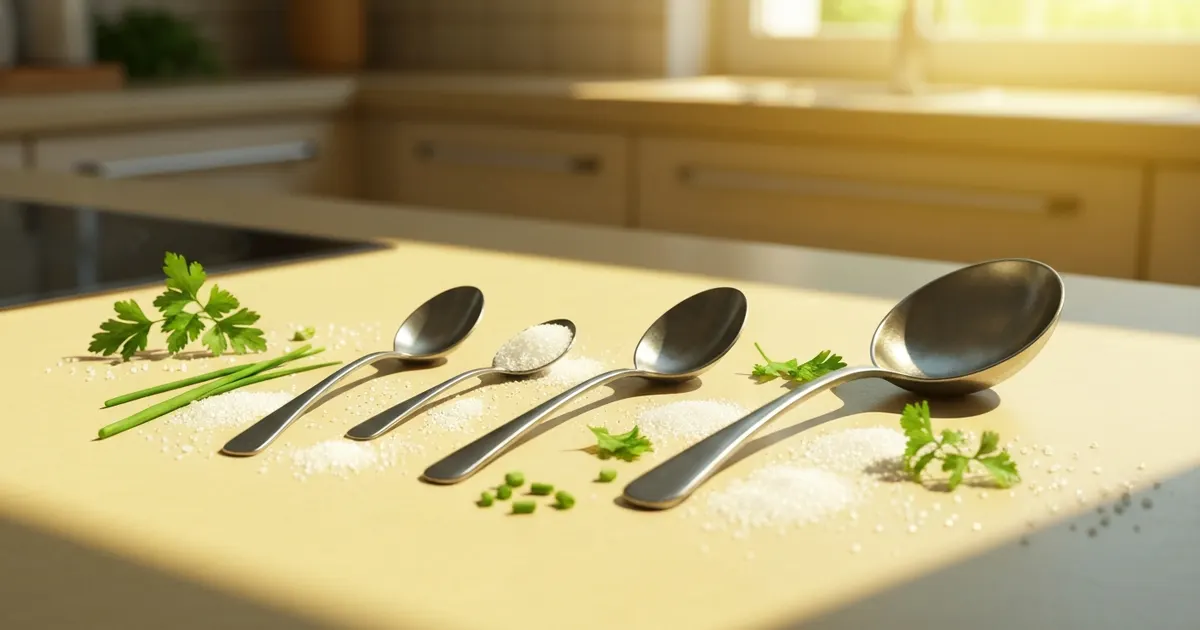
There are 3 teaspoons in 1 tablespoon in the US, UK and Canada. So 2 tablespoons is 6 teaspoons, and half a tablespoon is 1.5 teaspoons. The only common exception is Australia, where a tablespoon is 4 teaspoons.
This 3 to 1 ratio is one of the most useful kitchen facts you can memorise. It lets you measure out a tablespoon using only a teaspoon when the bigger spoon is dirty or missing, and it makes scaling a recipe up or down almost effortless. Whenever a recipe calls for a tablespoon and you only have a teaspoon in your hand, just count to three. Below you will find the full conversion chart, the metric math, worked examples, and the mistakes that trip people up most.
How many teaspoons are in a tablespoon?
One tablespoon holds exactly 3 teaspoons across the US, the UK and Canada. To convert tablespoons to teaspoons, multiply by 3. To go the other way and convert teaspoons to tablespoons, divide by 3.
The relationship is fixed by definition rather than by accident. In the United States, a tablespoon is defined as exactly 1/2 fluid ounce, and a teaspoon is defined as exactly 1/6 fluid ounce. Divide one by the other and you get a clean three: a tablespoon holds three times the volume of a teaspoon. Because the definitions are tied together, the ratio never drifts, no matter how big or small your particular set of measuring spoons happens to look.
In practice this means the abbreviations matter. The short form tbsp means tablespoon, while tsp means teaspoon. Mixing them up is one of the easiest ways to ruin a dish, especially with strong ingredients like salt, baking soda, or chili powder where tripling the amount is a real problem.
Tablespoon to teaspoon chart
This chart covers the amounts you reach for most often. It uses the US, UK and Canada standard where 1 tablespoon equals 3 teaspoons.
Common tablespoon to teaspoon conversions (US, UK and Canada)
| Tablespoons | Teaspoons | Millilitres (approx) |
|---|---|---|
| 1/4 tbsp | 0.75 tsp | 3.7 ml |
| 1/2 tbsp | 1.5 tsp | 7.4 ml |
| 1 tbsp | 3 tsp | 14.8 ml |
| 2 tbsp | 6 tsp | 29.6 ml |
| 3 tbsp | 9 tsp | 44.4 ml |
| 4 tbsp | 12 tsp | 59.1 ml |
| 1/16 cup | 0.75 tsp | 3.7 ml |
| 1 cup (16 tbsp) | 48 tsp | 237 ml |
If you often work in cups too, it helps to remember that 1 cup is 16 tablespoons, which is 48 teaspoons. That single fact lets you rescale almost any recipe in your head. For the full breakdown, see how many tablespoons are in a cup.
US vs UK vs metric: do the numbers change?
The 3 teaspoons per tablespoon ratio stays the same across the US, the UK and Canada, even though the underlying millilitre values differ slightly. A US tablespoon is about 14.8 ml and a US teaspoon is about 4.9 ml. The metric tablespoon used across much of Europe is a round 15 ml, and the metric teaspoon is 5 ml. Either way, three teaspoons fill one tablespoon.
That small gap between 14.8 ml and 15 ml almost never matters in everyday cooking. It only becomes meaningful when you are scaling a recipe many times over or measuring something potent like yeast or leavening agents. For those cases, a digital scale or a converter is far more reliable than spoons.
The one exception: Australia
Australia is the single common exception to the 3 teaspoon rule. An Australian tablespoon holds 4 teaspoons, not 3.
Australia is different
An Australian tablespoon is 20 ml, which equals 4 teaspoons, not 3. The US, UK and Canada all use the 15 ml, 3 teaspoon tablespoon.
If you are following an Australian recipe with non-Australian spoons, or the other way around, this gap of one full teaspoon per tablespoon can add up fast. Over four tablespoons of liquid you could be off by four whole teaspoons, which is more than a full extra tablespoon. When a recipe lists its origin or uses metric volumes, check whether a tablespoon is meant to be 15 ml or 20 ml before you start.
Practical kitchen examples
Knowing the ratio turns awkward measuring moments into quick mental math. A few common situations where it saves the day:
- Your tablespoon is in the dishwasher: scoop three level teaspoons instead.
- A recipe calls for 2 tbsp of vanilla but your only big spoon is sticky: measure 6 tsp.
- You are halving a recipe that uses 1 tbsp of oil: use 1.5 tsp.
- You want to triple a salad dressing that uses 1 tsp of mustard: that is exactly 1 tbsp.
- A medicine dose lists a teaspoon but you grabbed a tablespoon: stop, because that is three times the dose.
Here is a worked example. Say a soup recipe asks for 3 tablespoons of soy sauce, but your tablespoon measure has gone missing. Multiply 3 tablespoons by 3 teaspoons each and you get 9 teaspoons. Count out nine level teaspoons and you have matched the recipe exactly, with no big spoon needed.
Common mistakes to avoid
Most tablespoon and teaspoon errors come down to a handful of repeat offenders. Watch for these:
- Confusing tbsp and tsp on a label, which triples or thirds your ingredient by mistake.
- Using a regular eating spoon from the drawer instead of a proper measuring spoon, since dinner spoons vary wildly in size.
- Heaping the spoon when the recipe means a level measure: always sweep the top flat for dry ingredients.
- Forgetting the Australian 20 ml tablespoon when cooking from an Aussie blog.
- Assuming a dessertspoon equals a tablespoon: a dessertspoon is about 2 teaspoons, not 3.
For dry ingredients, the way you fill the spoon matters more than people think. Spooning flour in loosely versus scooping and packing it can change the real amount by a surprising margin, which is why bakers often weigh ingredients instead. If you bake a lot, learning how many grams are in a cup is the natural next step.
Good to know: dry vs liquid measuring
For spoons, the same measure works for both dry and wet ingredients, because a teaspoon and a tablespoon are volume units. The 3 to 1 ratio holds whether you are measuring water, oil, salt or baking powder.
Where it gets tricky is weight. Three teaspoons of flour and three teaspoons of honey take up the same space but weigh very different amounts, so you cannot convert spoons to grams with a single number. For precise baking, weigh dense or sticky ingredients on a scale rather than trusting spoon volume alone.
Convert any amount instantly
Need cups, grams or millilitres on top of teaspoons and tablespoons? The cooking converter handles every common kitchen unit, so you can switch between them without doing the math by hand.
🥄 Try the free tool Cooking Measurement Converter Free cooking converter for cups, tablespoons, teaspoons, fluid ounces, pints, quarts, ml and litres. Instant US customary kitchen measurement conversions.Frequently asked questions
How many teaspoons are in a tablespoon?
There are 3 teaspoons in 1 tablespoon in the US, the UK and Canada. This ratio is fixed by definition, so it holds no matter the size of your spoon set. Australia is the single common exception, where a tablespoon is 20 ml, equal to 4 teaspoons.
How many teaspoons in half a tablespoon?
Half a tablespoon is 1.5 teaspoons. Since a full tablespoon is 3 teaspoons, you simply halve that to get one and a half teaspoons. This is handy when you are scaling a recipe down and only have a teaspoon to measure with.
Is a tablespoon always 3 teaspoons?
Almost always. It is 3 teaspoons in the US, the UK and Canada, which covers most recipes you will meet. The exception is Australia, where the standard tablespoon is 20 ml, equal to 4 teaspoons. Always check whether a recipe uses Australian measures before converting.
How many teaspoons are in 2 tablespoons?
There are 6 teaspoons in 2 tablespoons. Multiply the number of tablespoons by 3 to get teaspoons, so 2 times 3 equals 6. The same rule scales up cleanly: 3 tablespoons is 9 teaspoons and 4 tablespoons is 12 teaspoons.
How do I convert teaspoons back to tablespoons?
Divide the number of teaspoons by 3. So 6 teaspoons is 2 tablespoons, and 9 teaspoons is 3 tablespoons. If the number does not divide evenly, the remainder stays as loose teaspoons. For example, 7 teaspoons is 2 tablespoons plus 1 teaspoon.
Is a dessertspoon the same as a tablespoon?
No. A dessertspoon sits between a teaspoon and a tablespoon, holding roughly 2 teaspoons or about 10 ml. A tablespoon holds 3 teaspoons or about 15 ml. If a recipe lists a dessertspoon, do not assume it means a tablespoon, or you will use too much.
Should I measure level or heaped spoons?
Measure level unless a recipe specifically says heaped. For dry ingredients, fill the spoon and sweep the top flat with a straight edge. A heaped spoon can hold far more than a level one, which throws off baking in particular where precise ratios matter most.
Does the 3 teaspoon rule work for both dry and liquid ingredients?
Yes. Teaspoons and tablespoons are volume units, so 1 tablespoon equals 3 teaspoons whether you measure water, oil, salt or flour. The ratio only breaks down if you try to convert to weight in grams, since different ingredients weigh different amounts for the same volume.