Shopify Alternatives in 2026: 10 Platforms Compared
By ToolNimba Editorial Team October 28, 2026 11 min read

- Top pick
 WooCommerce
WordPress users and full control
Starting priceFreeCheck out WooCommerceRead our review - Runner-up
 BigCommerce
Scaling stores
Starting price$39 per monthCheck out BigCommerceRead our review - Also great
 Wix
Beginners and small stores
Starting price$17 per monthCheck out WixRead our review
How we researched this
We compared official pricing and feature pages, app store listings, privacy policies and public user reviews. Prices change, so check the provider's site before you pay.
Key takeaways
- WooCommerce is the best free alternative for WordPress users who want full control over design, data, and checkout.
- BigCommerce suits growing stores that want built-in features and no platform transaction fees without a large app stack.
- Wix and Squarespace suit beginners and design-led brands that want a fast launch with less setup.
- Square Online is the best free alternative for in-person sellers who already use Square for payments and point of sale.
- Transaction fees, app costs, and payment rates matter more than the headline monthly price, so total them before you choose.
Quick comparison
| Name | Best for | Starting price | Free plan | |
|---|---|---|---|---|
| WooCommerce | WordPress users and full control | Free | Yes | Visit |
| BigCommerce | Scaling stores | $39 per month | Free trial | Visit |
| Wix | Beginners and small stores | $17 per month | Yes | Visit |
 Squarespace | Design-led brands | $25 per month | Free trial | Visit |
 Square Online | In-person sellers | Free | Yes | Visit |
 Ecwid | Adding a store to an existing site | $5 per month | Yes | Visit |
 Webflow | Design-heavy custom stores | $29 per month | Free trial | Visit |
 Hostinger Website Builder | Budget stores | $2.99 per month | No | Visit |
 PrestaShop | Open-source international stores | Free | Yes | Visit |
 Shift4Shop | Cost-sensitive US stores | See website | Yes | Visit |
The best Shopify alternatives
Shopify is popular for a reason, but its app costs, transaction fees, and checkout limits push many sellers to look elsewhere. The platforms below cover hosted builders, open-source software, and tools that add a store to a site you already own. We compared official pricing, transaction fees, and feature pages to build this list.
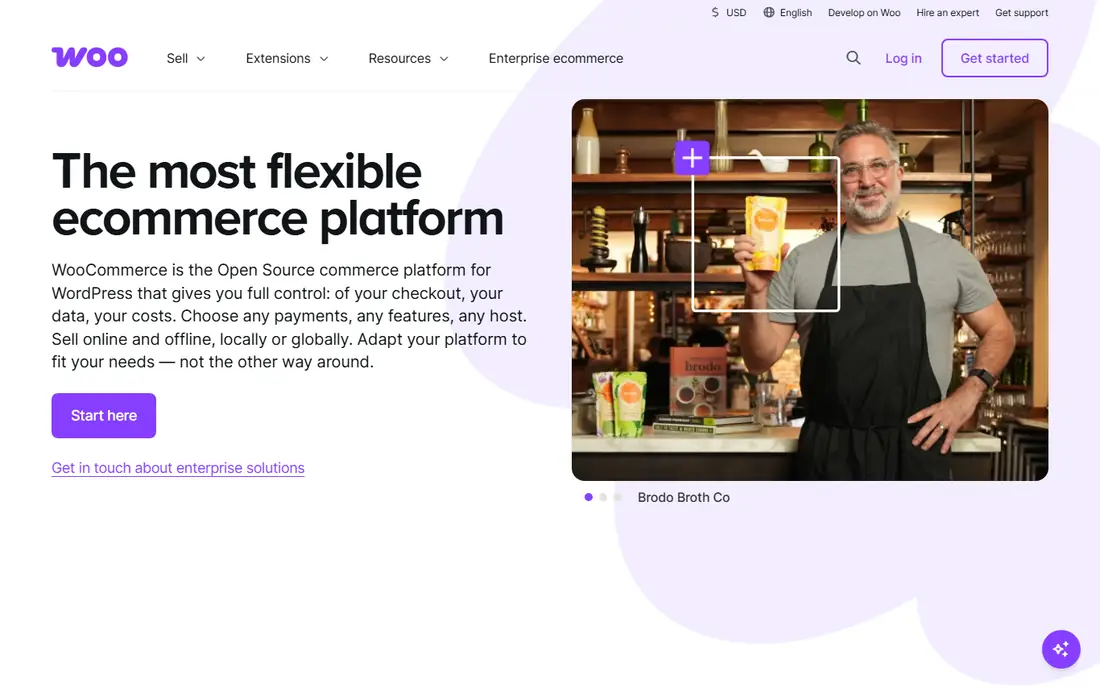
WooCommerce turns a WordPress site into a full store, which makes it the natural pick for anyone already on WordPress. You own your data and hosting, you can choose any payment processor, and you can change almost any part of the store with themes and plugins. Content-led stores also benefit, since blogging and SEO tools in WordPress are stronger than in most hosted builders.
The cost is effort. Hosting, backups, security, and plugin updates fall to you or your host, and a badly chosen plugin can slow a store. Budget for hosting and a payment rate on top of the free plugin. If you want control and you are comfortable with WordPress, WooCommerce is hard to beat on value.
- Free core plugin with no platform transaction fee
- Huge theme and plugin library
- Full control over hosting, data, and checkout
- You pay for hosting, security, and maintenance
- Setup and updates need more technical skill than a hosted builder
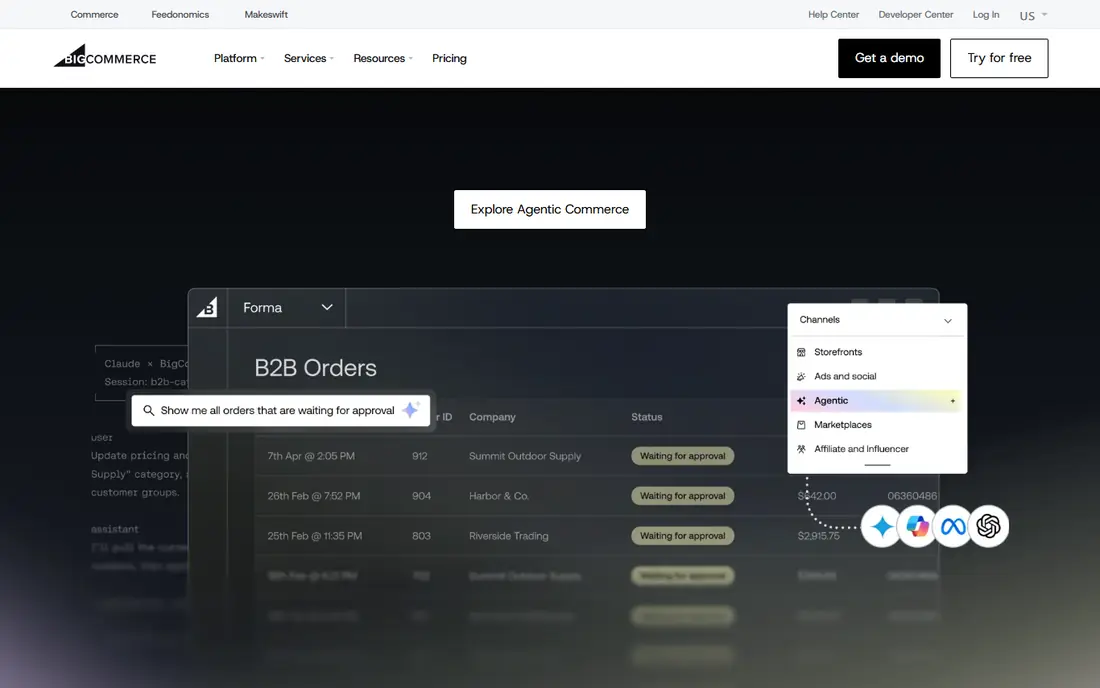
BigCommerce suits stores that have outgrown a simple builder but do not want Shopify app costs. It includes product options, discounts, abandoned cart recovery, and multi-channel selling without buying many add-ons, and it charges no extra platform transaction fee. That built-in depth helps larger catalogs and B2B sellers who need customer groups and price lists.
The entry price is higher than Wix or Hostinger, and plan tiers are tied in part to annual sales volume, so a fast-growing store may move tiers sooner than expected. Check that sales threshold before you commit. For scaling brands that want fewer apps and predictable fees, BigCommerce is a strong alternative.
- No platform transaction fees on any plan
- Many built-in features reduce app costs
- Strong B2B and multi-channel selling tools
- Higher entry price than budget builders
- Plans can move up as annual sales grow
- Themes are less varied than some rivals

Wix is the easiest hosted alternative for a small store that needs to launch quickly. Its builder is visual, its templates cover many niches, and its AI setup can produce a first draft store in minutes. Small sellers also get booking, blog, and email tools in the same account, which reduces the need for extra services.
Larger or more complex stores may hit limits on product options, checkout customization, and backend workflows. Wix also charges standard payment processing rates on top of the plan. If you want a simple, good-looking store with minimal setup, Wix is a sensible pick, but test its ecommerce plan, not just its website plan, before you buy.
- Drag-and-drop builder with many templates
- AI setup help for a fast launch
- Built-in marketing, booking, and blog tools
- Less backend flexibility than WooCommerce or BigCommerce
- Switching templates later can be limited
- Ecommerce features vary by plan
Squarespace appeals to brands where design is the selling point. Its templates look refined out of the box, and its editor keeps fonts, colors, and layouts consistent without code. For creators, service sellers, and small product brands, the built-in blog, email, and scheduling tools cover much of the marketing stack in one place.
The ecommerce depth is thinner than BigCommerce or WooCommerce, and integration choices are narrower. Basic commerce plans also carry a transaction fee in addition to payment processing, so check the plan that removes it. If your catalog is small and design matters most, Squarespace is a strong, calm alternative.
- Polished templates and strong visual design
- Built-in blogging, email, and scheduling tools
- Simple store setup for small catalogs
- Fewer ecommerce integrations than Shopify or WooCommerce
- A transaction fee applies on the basic commerce plan
- Less suited to very large catalogs
Square Online is the obvious free alternative for shops, markets, and restaurants that already take payments with Square. Inventory, orders, and customer data sync between in-person sales and the online store, which avoids double entry. The free plan lets a small seller test online orders without a monthly fee, paying only payment processing.
Design flexibility is modest, and advanced ecommerce features require paid plans. Square Online also works best inside the Square system, so sellers who need a wide app market may feel constrained. For a brick-and-mortar business adding online orders, it is the lowest-friction free start on this list.
- Free plan to start
- Syncs with Square point of sale and inventory
- Simple setup for sellers who already use Square
- Design and customization are more limited than Wix or Squarespace
- Paid plans are needed for advanced features and lower processing quirks
Ecwid solves a specific problem: you already have a website or a social following, and you want to add a store without rebuilding. Its widget embeds into existing sites, and you can also sell on social channels from the same catalog. The free plan covers a handful of products, which suits a side project or a test store.
For a large standalone store, Ecwid feels less complete than WooCommerce or BigCommerce, and design options are narrower. Paid plans start low, but check product limits and feature gates before you grow. If you want to add selling to a site you already love, Ecwid is the simplest path.
- Free plan for a small store
- Embeds into WordPress, Wix, Squarespace, and social pages
- No Ecwid transaction fee on paid plans
- Design control is more limited than a full builder
- Advanced features require higher plans
- Less suited to a large standalone store
Webflow suits designers and brands that want a custom storefront without writing all the code by hand. Its visual builder gives control over layout, animation, and CMS content, which helps content-led stores that need both a blog and a shop. Hosting, security, and performance are handled by Webflow, so you avoid server maintenance.
The trade-off is learning time and ecommerce depth. Webflow ecommerce is capable for small to mid-sized catalogs, but it lacks the app depth of Shopify and the plugin range of WooCommerce. Standard plans also carry a transaction fee. If design control matters more than app count, Webflow is a compelling alternative.
- Precise visual design control without a template lock-in
- Strong CMS for content-led stores
- Clean hosting and performance tools
- Learning curve is steeper than Wix
- Ecommerce transaction fee on the standard plan
- Smaller ecommerce app market than Shopify
Hostinger Website Builder is the cheapest way to get a store online with hosting included. Its AI builder can draft pages fast, and its price suits side projects, test stores, and very small sellers who do not want a $29 or $39 monthly bill. For a simple catalog and basic orders, it covers the essentials.
Advanced selling, integrations, and reporting are lighter than BigCommerce or WooCommerce, and intro prices often rise on renewal, so check the renewal rate. If budget is the main driver and your store is simple, Hostinger is a fair low-cost start, with a clear upgrade path later if sales grow.
- Very low entry price with AI builder tools
- Hosting included
- Simple setup for side projects and small stores
- Ecommerce features are lighter than larger platforms
- Support and app depth are thinner
- Renewal prices can be higher than intro prices
PrestaShop is an open-source alternative for sellers who want control and international reach without Shopify fees. It supports multiple languages, currencies, and tax rules out of the box, which helps stores selling across Europe and beyond. Its module library adds payment, shipping, and marketing features as needed.
Like WooCommerce, PrestaShop needs hosting and upkeep, and paid modules can add up. It also has a smaller US community than WooCommerce, so finding help may take longer. For a technically comfortable team with international sales, PrestaShop is a flexible and cost-effective option.
- Free open-source core with strong international and multilingual support
- Large module library
- Full control over hosting and data
- Needs hosting, maintenance, and technical skill
- Some modules are paid
- Support depends on community and partners
Shift4Shop, formerly 3dcart, offers a free route for US sellers who process payments through Shift4, which can remove the monthly platform fee. Its built-in features cover product options, discounts, and SEO tools without a large app stack, and it handles larger catalogs better than simple builders.
Read the free plan terms closely, since eligibility depends on processing volume and provider choice, and published pricing has varied between pages. The interface is functional rather than polished. If you sell in the US, use Shift4 payments, and want to cut monthly fees, Shift4Shop is worth a careful look.
- Free plan options for US sellers using its payment processing
- Built-in ecommerce features without many apps
- Supports larger catalogs
- Free plan terms depend on payment processing use
- Interface feels less modern than Wix or Squarespace
- Pricing pages have shown conflicting figures
How we picked these
We compared official pricing, transaction fees, free plans, and feature pages, and we favored platforms that are still actively sold in 2026 and can run a real US store. We left out enterprise-only platforms such as Adobe Commerce for most small sellers, since their costs and setup fit large teams. Prices and fee structures change, so confirm the current plan, payment rate, and transaction fee on the vendor site before you migrate.
What to total before you switch
Add the monthly plan, payment processing rate, platform transaction fee, app or module costs, and any theme or hosting cost. A $5 plan with a 2 percent transaction fee can cost more than a $39 plan with no platform fee once sales grow. Run that total at your current monthly sales and at double that figure.
Check migration costs early
Export products, customers, orders, and blog content before you commit, and test how redirects, SEO URLs, and payment settings carry over. A cheap platform that breaks your search rankings or order history can cost more than a higher monthly fee. Keep your old store live until the new one has processed real orders cleanly.
Match the platform to your team
A solo seller needs a hosted builder with support. A team with a developer can use WooCommerce or PrestaShop and gain control. A growing brand needs built-in features and multi-channel tools more than a pretty template. Choose for the team you have, not the team you hope to hire next year.
Sources
- https://woocommerce.com
- https://www.bigcommerce.com
- https://www.wix.com
- https://www.squarespace.com
- https://squareup.com
- https://www.ecwid.com
- https://webflow.com
- https://www.hostinger.com
- https://www.prestashop.com
- https://www.shift4shop.com
- https://zapier.com/blog/shopify-alternatives/
- https://optinmonster.com/best-shopify-alternatives/