Twitter Alternatives in 2026: 10 Apps Compared
By ToolNimba Editorial Team October 28, 2026 11 min read

- Top pick
 Bluesky
Classic Twitter feel with custom feeds
Starting priceFreeCheck out BlueskyRead our review - Runner-up
 Threads
Largest audience and reach
Starting priceFreeCheck out ThreadsRead our review - Also great
 Mastodon
Community-run servers, no ads
Starting priceFreeCheck out MastodonRead our review
How we researched this
We compared official pricing and feature pages, app store listings, privacy policies and public user reviews. Prices change, so check the provider's site before you pay.
Key takeaways
- There is no single replacement for Twitter, now called X, so pick by where your community actually posts.
- Bluesky is the closest to classic Twitter, with custom feeds and chronological options on an open protocol.
- Threads has the largest audience here, thanks to its Instagram connection, but its feed is algorithmic and Meta-run.
- Mastodon suits people who want community-run servers, no ads, and more control over moderation.
- Most alternatives are free to use, so try two for a week and keep the one where you actually find conversation.
Quick comparison
| Name | Best for | Starting price | Free plan | |
|---|---|---|---|---|
| Bluesky | Classic Twitter feel with custom feeds | Free | Yes | Visit |
| Threads | Largest audience and reach | Free | Yes | Visit |
| Mastodon | Community-run servers, no ads | Free | Yes | Visit |
 Tumblr | Short posts, art, and longer blogs | Free | Yes | Visit |
 Reddit | Topic communities and discussion | Free | Yes | Visit |
 Hive Social | Chronological posts and polls | Free | Yes | Visit |
 Micro.blog | Own-domain microblogging | $5 per month | No | Visit |
 Pillowfort | Fandom and hobby communities | Free | Yes | Visit |
 Damus | Open Nostr posting | Free | Yes | Visit |
 Primal | Polished Nostr experience | Free | Yes | Visit |
The best Twitter alternatives
These apps cover short posts, communities, and open protocols, so start with the one your friends, field, or fandom already uses.
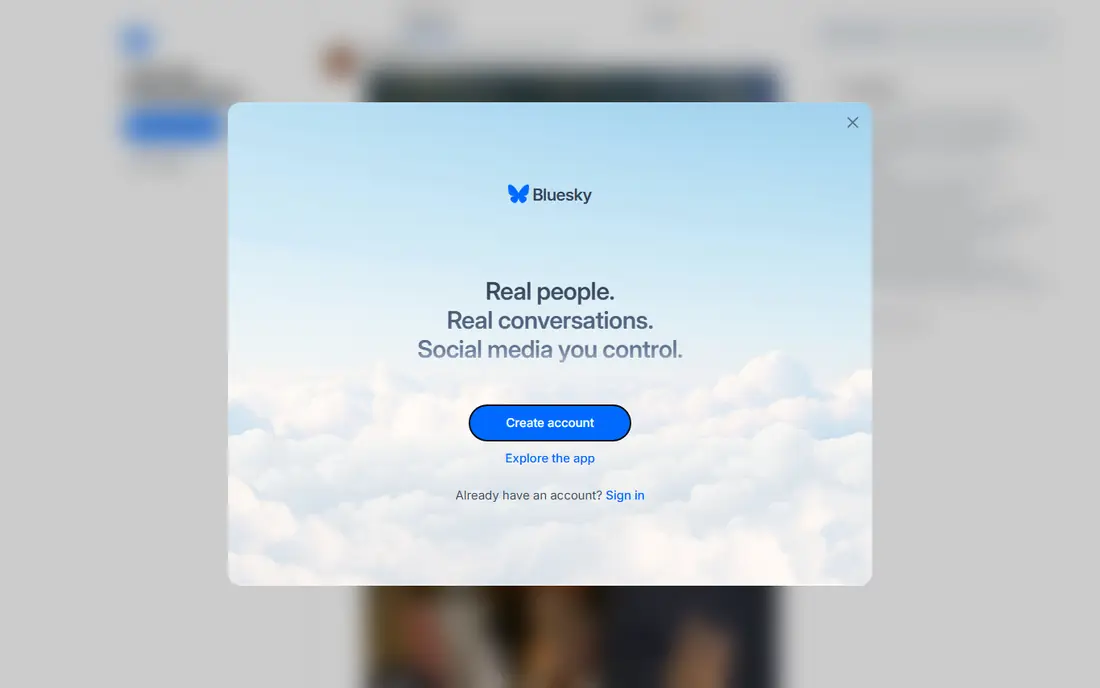
Bluesky is our pick for most people leaving X, because it feels closest to classic Twitter. Posts are short, replies and reposts work as expected, and you can choose custom feeds for topics, rather than only seeing one algorithmic feed. Moderation is also more flexible: you can subscribe to other people moderation filters and block lists, instead of only using the platform default.
Bluesky runs on the open AT Protocol, which means your identity and followers can move more easily than on a closed platform, in principle. The audience is smaller than Threads, with tens of millions of registered users and a smaller daily active base in 2026, so some news and niche communities may still be thinner. If you miss old Twitter, start here.
- Short posts up to 300 characters
- Custom feeds you can choose
- Chronological options and composable moderation
- Smaller audience than Threads
- Some communities and news sources are still on X
- Discovery can feel quiet in niche topics
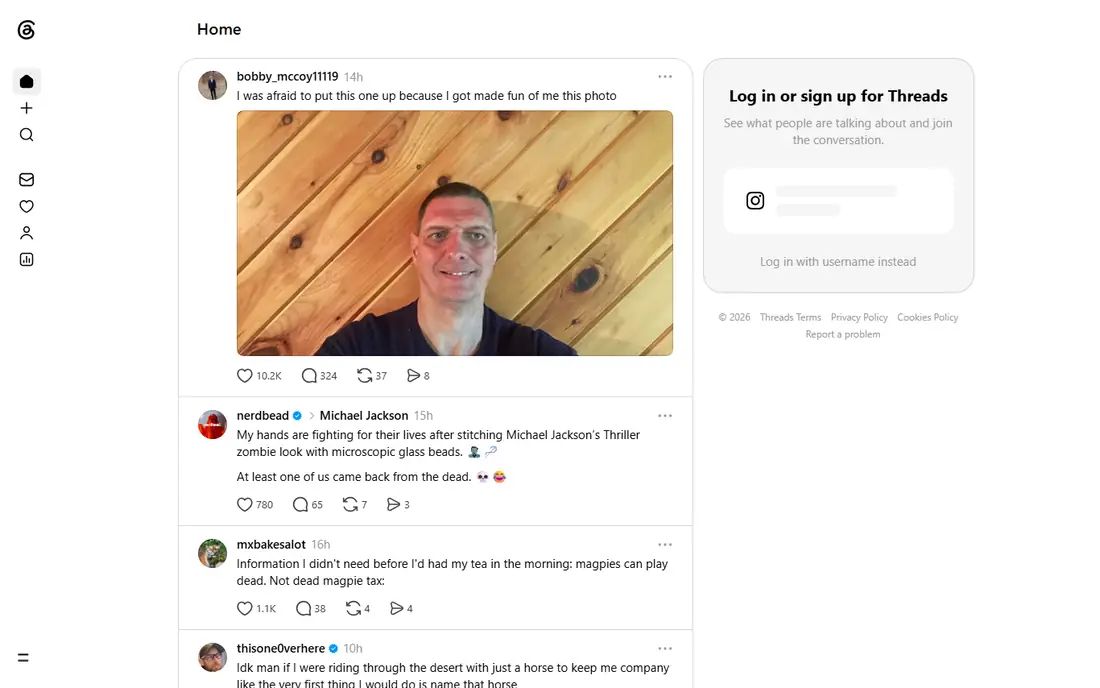
Threads, from Meta, is the best alternative if reach matters most. It passed 400 million monthly users in 2026 in recent reports, and signing up from Instagram means many of your existing contacts are already there. Posting is simple, with text, photos, video, and polls, and the app is polished on mobile.
The trade-off is control. The feed is algorithmic, chronological options are limited, and moderation follows Meta rules, which some users dislike. Threads is also less open than Bluesky or Mastodon, so your account and audience stay inside Meta system. If your goal is to be seen by the most people, Threads wins. If your goal is control, Bluesky or Mastodon wins.
- Very large audience through Instagram
- Easy setup from an Instagram account
- Text posts with photos, video, and polls
- Algorithmic feed with less chronological control
- Meta moderation and data rules
- Hard news can feel deprioritized
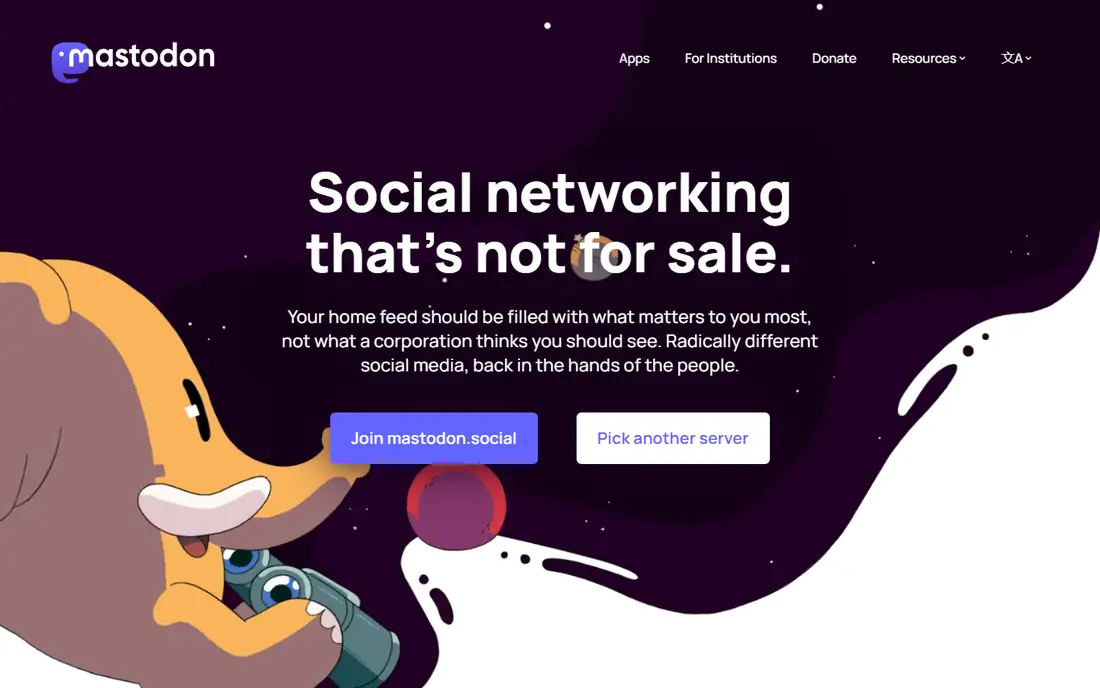
Mastodon is a decentralized network of servers, each with its own community, rules, and moderation, all connected so users on different servers can follow and reply to each other. There are no ads, no central algorithmic feed pushing engagement, and many servers focus on a topic, region, or language. That structure appeals to people who want social media without a single company controlling the feed.
The first step is the hardest: you must pick a server when you sign up. Large general servers such as mastodon.social are a safe start, and you can move servers later without losing followers in most cases, though the process takes care. If you value independence and community moderation over a single large audience, Mastodon is the strongest open option.
- Decentralized, community-run servers
- No ads and no central algorithm
- Strong moderation tools per server
- Choosing a server confuses new users
- Audience is split across servers
- Some servers close or change rules
Tumblr is not a new Twitter clone, but it is a long-running alternative for people who want short posts plus art, GIFs, and longer writing in one place. Reblogging, tags, and community blogs make it strong for fandom, art, humor, and hobby communities, and posts can be longer and more visual than a typical tweet.
For breaking news and real-time conversation, Tumblr is weaker than Bluesky, Threads, or Mastodon, and discovery can feel less focused. If your Twitter use was mainly news and hot takes, Tumblr may frustrate you. If it was art, fandom, jokes, and personal blogs, Tumblr may feel like home in a way the newer clones do not.
- Mix of short posts, images, GIFs, and long blogs
- Strong art, fandom, and humor communities
- Reblogging culture
- Less suited to breaking news
- Feed and discovery can feel chaotic
- Some features need a paid tier for full use
Reddit is a different kind of Twitter alternative: instead of following people, you join topic communities called subreddits, from news and sports to hobbies and local areas. Discussion threads can run long and detailed, which suits questions, advice, and deep dives far better than a short-post feed. Search across Reddit is also useful for niche topics that rarely trend elsewhere.
Reddit is not a drop-in Twitter replacement for real-time posts from people you follow, and each community sets its own rules, so the experience varies a lot. If you used Twitter mainly to follow topics and learn, Reddit may actually serve you better. If you used it to follow specific people in real time, pair Reddit with Bluesky or Threads.
- Huge range of topic communities
- Long threads and detailed discussion
- Search works well for niche questions
- Not a real-time short-post feed
- Community rules vary widely
- Some communities are hostile or heavily moderated
Hive Social gained attention as a simple, chronological alternative with a familiar layout. You post text and images, run polls, and ask questions, and the feed shows posts in order rather than through a heavy algorithm. That simplicity appeals to users who want to see what friends posted, in order, without engagement tricks.
The audience is smaller than Bluesky or Threads, so your feed may feel quiet unless your friends also join. Professional and news communities are thinner here than on Bluesky. Hive is best as a second app for a friend group or hobby circle that wants a calm, chronological feed, rather than as a sole replacement for a news-heavy Twitter habit.
- Chronological feed
- Text, image, polls, and Q&A posts
- Simple, Twitter-like layout
- Smaller audience than Bluesky or Threads
- Fewer news and professional communities
- App development has been uneven at times
Micro.blog is for people who want to own their posts. You publish short posts to your own blog, optionally on your own domain, and other Micro.blog users can follow, reply, and discover you through a community timeline. There are no ads and no engagement algorithm, and you can cross-post to Bluesky, Mastodon, and other networks from the same place.
The cost and the smaller audience are the limits. Micro.blog starts at $5 per month, with no free plan, and conversation is quieter than on larger networks. If owning your content and avoiding ads matters more than reach, Micro.blog is a thoughtful, independent choice. If you want a lively feed on day one, start with Bluesky instead.
- Short posts on your own blog or domain
- No ads and no algorithmic feed
- Cross-posting to other networks
- Paid, from $5 per month
- Smaller social audience
- Less real-time conversation than Bluesky or Threads
Pillowfort is a community blogging platform that suits fandom, art, and hobby groups. Users create communities around a shared interest, post art, writing, and updates, and follow communities rather than only individuals. That structure makes it feel more like a set of clubhouses than a single global feed.
The audience is small compared with Bluesky or Threads, and registration has been limited at times to manage growth. Pillowfort is not a good pick for breaking news or professional reach. For a fandom or hobby community that wants its own space with longer posts and art, it is a welcoming alternative.
- Community blogs and hobby spaces
- Longer posts and art alongside short updates
- User-controlled communities
- Smaller audience
- Registration has sometimes been limited
- Less suited to news or professional networking
Damus is an app for Nostr, an open protocol where your identity is a cryptographic key pair, not an account on a company server. Posts, called notes, can be read by any Nostr app, and no single company can ban your identity from the whole network, though individual relays can block content. That openness appeals to users who want maximum control over their social identity.
The learning curve is real. Keys, relays, and clients are unfamiliar to most social media users, and moderation is thinner than on Bluesky or Mastodon. Damus is best for technically curious users who value open protocols and are willing to learn Nostr basics. Most casual users will find Bluesky or Mastodon easier.
- Built on the open Nostr protocol
- No central company controls your account
- Keys, not passwords, control identity
- Nostr concepts confuse new users
- Smaller audience
- Fewer moderation tools than Bluesky or Mastodon
Primal is another Nostr app, but with a more polished, mainstream feel than Damus. The feed, profiles, and media handling look familiar to Twitter users, which lowers the barrier to trying Nostr. It also includes wallet features for tipping creators with bitcoin-based payments in regions where that is supported, though most users will ignore that part.
Primal shares Nostr limits: a smaller audience, relay-based moderation, and key management that new users must learn. If Nostr appeals to you but Damus feels rough, Primal is the smoother entry point. If you just want a simple Twitter replacement, Bluesky remains the easier choice.
- Polished, fast Nostr app
- Short posts, media, and feeds
- Wallet features for tipping creators in some regions
- Same Nostr learning curve as Damus
- Smaller audience than major networks
- Wallet features are not relevant to most users
How we picked these
We compared official sites, recent Twitter alternative guides, and current availability, and we checked that each homepage loads and belongs to the product named. We favored apps that are free to use, actively available in 2026, and offer a distinct model, from large centralized apps to open protocols and community platforms. We left out apps that have shut down, require payment before any posting, or are only scheduling tools for X rather than alternatives to it. Audience sizes change quickly, so check where your specific community posts before committing to one app.
Choosing a Twitter alternative
Rank what you used Twitter for: news, friends, a profession, a fandom, or public reach. News and professional users should start with Bluesky, with Threads for reach. Friends and hobby groups should try Hive Social or Pillowfort. People who want control should try Mastodon, and people who want to own their posts should try Micro.blog.
Try two apps for a week
Sign up for two alternatives, follow the same 20 accounts or topics on each, and post a few times. After a week, keep the app where you found real replies and useful posts, not just the app with the best design. Most people end up with one main app and one backup, rather than a single perfect replacement.
Moving your audience
Tell followers on X where you are going, pin a post with your new handle, and cross-post for a few weeks while people move. On Bluesky and Mastodon, use the same handle or display name where possible, so old followers can find you. Expect the move to take time, since audiences rarely switch all at once.
Sources
- https://bsky.app
- https://www.threads.com
- https://joinmastodon.org
- https://www.tumblr.com
- https://www.reddit.com
- https://www.hivesocial.app
- https://micro.blog
- https://www.pillowfort.social
- https://damus.io
- https://primal.net
- https://www.lilachbullock.com/twitter-alternatives/
- https://techilu.com/alternatives-to-twitter/