Best YouTube Alternatives in 2026: 9 Products Compared
By ToolNimba Editorial Team October 28, 2026 11 min read

- Top pick
 Vimeo
Professional hosting and embeds
Starting price$12 per monthCheck out VimeoRead our review - Runner-up
 Dailymotion
Public uploads like YouTube
Starting priceFreeCheck out DailymotionRead our review - Also great
 Twitch
Live streaming and community
Starting priceFreeCheck out TwitchRead our review
How we researched this
We compared official pricing and feature pages, app store listings, privacy policies and public user reviews. Prices change, so check the provider's site before you pay.
Key takeaways
- No single platform replaces all of YouTube, so pick an alternative for one job, such as clean hosting, live community, short video discovery, or paid memberships.
- Vimeo is the strongest choice for professional hosting and ad-free embeds, with a Starter plan at $12 per seat per month billed annually.
- Dailymotion, Rumble, and Twitch are the closest free public upload options, but each has a smaller audience and weaker search traffic than YouTube.
- TikTok and Kick suit discovery and live interaction, while Wistia suits businesses that judge video by leads rather than views.
- PeerTube is the open, decentralised option for creators who want control and no ads, but it has no built-in monetisation and far less built-in discovery.
Quick comparison
| Name | Best for | Starting price | Free plan | |
|---|---|---|---|---|
| Vimeo | Professional hosting and embeds | $12 per month | Yes | Visit |
| Dailymotion | Public uploads like YouTube | Free | Yes | Visit |
| Twitch | Live streaming and community | Free | Yes | Visit |
 Rumble | Independent creators and video monetisation | Free | Yes | Visit |
 TikTok | Short video discovery | Free | Yes | Visit |
 Wistia | Business video and lead capture | Free | Yes | Visit |
 Nebula | Ad-free educational streaming | See website | No | Visit |
 PeerTube | Decentralised, ad-free video | Free | Yes | Visit |
 Kick | Live streaming with higher revenue share | Free | Yes | Visit |
The best YouTube alternatives
YouTube combines public search, long videos, live streams, recommendations, and creator payments at a scale no rival matches. That is why most creators who diversify keep YouTube for reach and add one alternative for a specific need, such as cleaner embeds, a livelier live chat, or a more direct way to earn from fans. The platforms below each do at least one of those jobs well.
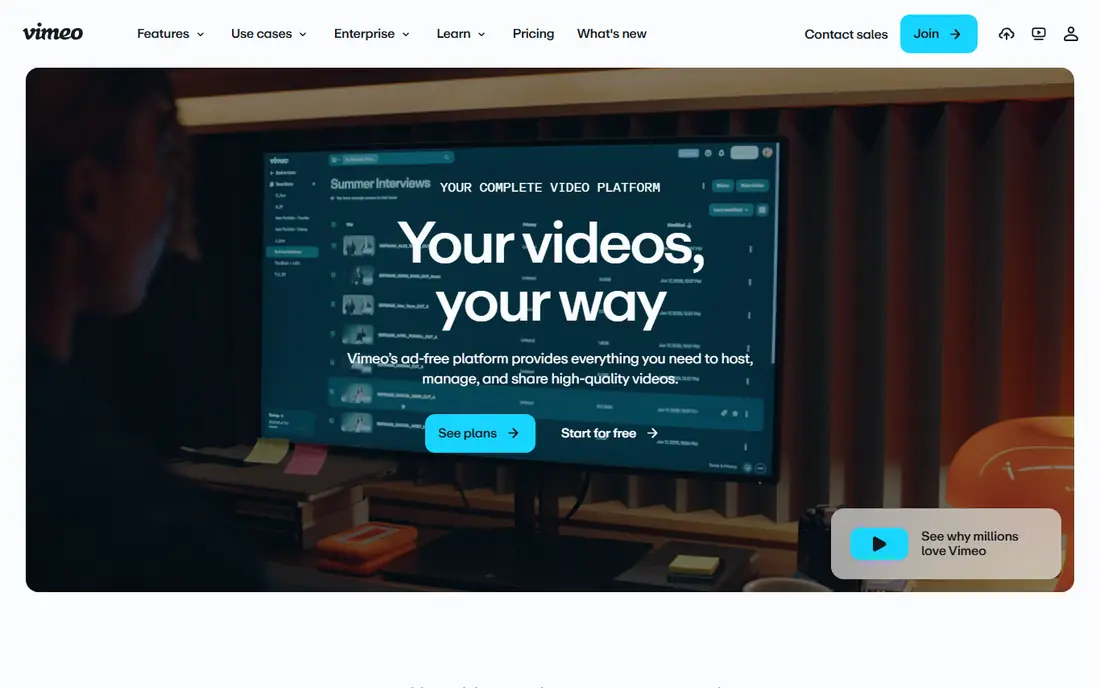
Vimeo is our pick for creators and businesses that need video to look professional on their own site. The player has no ads and no suggested videos from other channels, so a sales page, course lesson, or portfolio keeps the viewer focused on your content.
The trade-off is discovery. People do not browse Vimeo for new creators the way they browse YouTube, so Vimeo works best as hosting for an audience you already reach through email, social media, or search. If you need public reach, pair Vimeo hosting with a public platform.
- Ad-free, customisable player with clean embeds
- Privacy controls including domain level embed limits on paid plans
- Showcase pages for portfolios and courses
- Starter at $12 per seat per month billed annually, with monthly billing higher
- Audience discovery is far weaker than YouTube
- Storage and bandwidth limits apply
Dailymotion is the closest free public alternative in structure, with channels, playlists, and a partner program for creators who meet its eligibility rules. You can upload long videos for free, build a public channel, and reach viewers in regions where Dailymotion has a stronger presence than in the US.
The honest catch is scale. Dailymotion will not replace YouTube search traffic for most creators, and ad revenue depends on views, region, and partner status. Use it to diversify distribution and to reach viewers who already use the platform, not as a like for like replacement for YouTube discovery.
- Free public uploads and channels that work like YouTube
- A partner program for ad revenue
- Uploads up to 2 hours or 4GB in the limits we checked
- Smaller audience and weaker search traffic than YouTube
- Ads on free viewing
- Monetisation eligibility and rates vary by region and channel
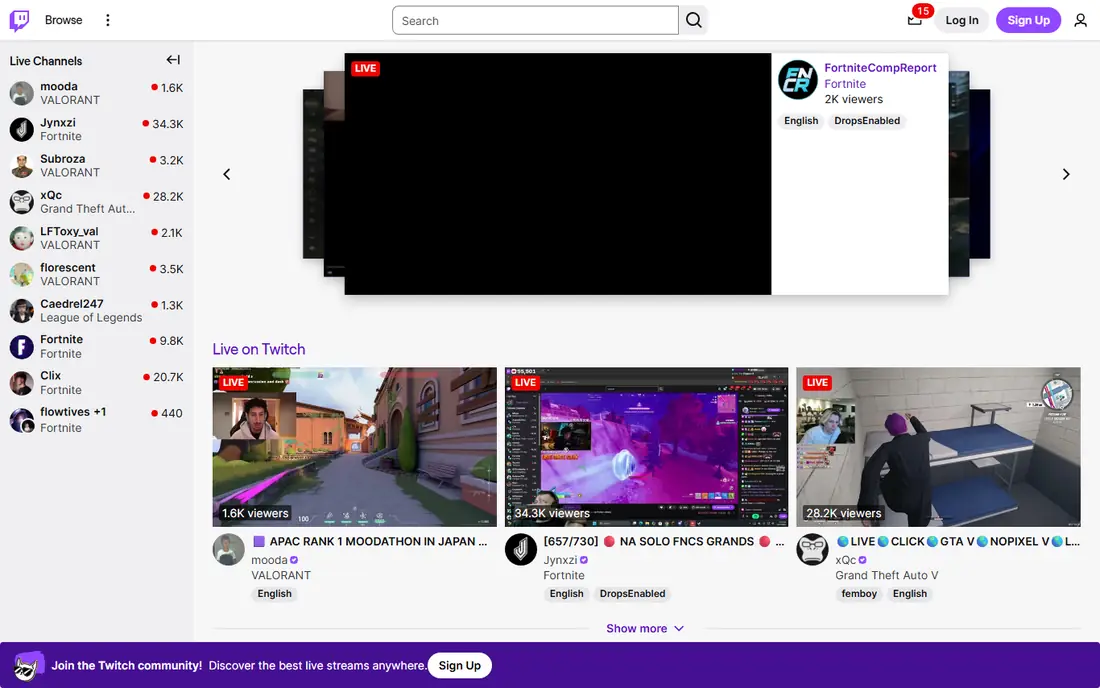
Twitch is the best alternative if live interaction is the point. Real time chat, channel points, subscriptions, and Bits create a community feel that a pre-recorded video cannot match, and live categories help new streamers get found while they are actually live.
The limit is longevity. A live stream fades fast once it ends, and Twitch is not a search engine for tutorials in the way YouTube is, so older content brings in far less traffic over time. Many streamers therefore keep Twitch for live shows and YouTube for edited videos that keep working for months.
- Live chat, subscriptions, Bits, and ads for creators
- Strong discovery for gaming, music, and talk streams
- Free to start streaming
- Saved videos and highlights have limits
- Long term search traffic is weaker than YouTube
- Income depends heavily on live hours and audience habits
Rumble suits independent creators who want a free public platform with a monetisation path outside YouTube. You can upload videos, build a channel, stream live, and earn through its monetisation program where eligible, without paying for hosting.
Rumble does not match YouTube for audience size, search, or recommendation reach, so most creators should treat it as diversification rather than a full move. Its community and content policies also differ from YouTube, which matters for brands and educators who need a predictable environment.
- Free public uploads with a monetisation program
- Live streaming is available
- A clear option for creators who want an alternative public audience
- Smaller audience than YouTube
- Content mix and moderation approach differ from YouTube, so check current policies
- Discovery and search traffic are limited
TikTok is the discovery pick for creators who can teach, entertain, or explain in short videos. The feed can put a new creator in front of thousands of viewers without an existing audience, which is a sharp contrast to the slow build on many other platforms.
The format is also the limit. Complex tutorials, full courses, and detailed reviews do not fit well in short clips, and feed views rarely keep bringing in traffic months later the way a YouTube tutorial can.
- Very strong short video discovery for new creators
- Free uploads, live video, and creator rewards where eligible
- A huge mobile audience
- Short format limits depth for tutorials and courses
- Feed traffic fades fast compared with search traffic
- Monetisation eligibility and rates vary
Wistia is built for businesses that judge video by leads and sales, not by view counts. The player supports email capture, calls to action, and second by second heatmaps that show where viewers rewatch, skip, or leave.
Wistia is not a place to find a new audience. There is no public feed or search discovery like YouTube, so it works best for videos on your own site, landing pages, and email campaigns. If your goal is to turn viewers into contacts, Wistia gives you tools YouTube does not.
- Free plan with 25GB of storage
- Business at $79 per month billed annually adds lead capture, calls to action, and heatmaps
- Clean, brandable player with no ads
- Business at $79 per month is a large step up from the free plan
- Free plan bandwidth and branding limits apply
- Not a public discovery platform
Nebula is a viewer focused alternative for people who want thoughtful, ad-free educational video without the noise of a public feed. It was built by creators known for educational content, and its catalogue leans toward science, history, film, and technology, with originals that do not appear on YouTube.
Creators should note the difference. Nebula is not an open upload site where anyone can start a channel, and joining as a creator depends on its curated roster. Viewers pay a subscription, so check the current price on the Nebula site before subscribing, since bundle offers with other services change over time.
- Ad-free streaming from established educational creators
- Original series and documentaries not found on free platforms
- A subscription model that avoids ad interruptions
- No free plan for viewers
- You cannot simply upload and build a channel as on YouTube
- The catalogue is curated rather than open to all creators
PeerTube is the control pick for creators and communities that want independence from a single company. Because it is federated, anyone can run an instance, set moderation rules, and share videos with other instances, and viewers watch without ads or tracking by a central platform.
The trade-off is audience and income. There is no built-in ad revenue, no central recommendation engine to surface new creators, and the total audience is split across many instances. Uploading also depends on the instance you choose, since storage limits and rules vary.
- Free and open source, with no ads and no central algorithm
- Instances set their own moderation rules
- Federation lets instances share videos across servers
- No built-in monetisation for creators
- Audience is far smaller and split across instances
- Finding videos requires instance browsing or a search tool such as Sepia Search
Kick is the live streaming challenger for creators who want a higher share of subscription revenue. Its widely reported 95 to 5 split for creators compares favourably with the standard splits on larger live platforms, and it offers live chat, subscriptions, and a growing set of streamer tools.
The audience is still far smaller than Twitch, and discovery for non gaming content is thinner. Kick also carries a different content mix and moderation history, so brands should review current policies and the kinds of streams that dominate the homepage.
- Free to stream and watch
- A 95 to 5 revenue split for creators is widely reported for subscriptions
- Live chat and community features for streamers
- Smaller audience and catalogue than Twitch
- Discovery outside gaming and live talk is limited
- Platform policies and features change as the service grows
How we picked these
We compared official feature pages, pricing pages, upload and monetisation terms, and public reviews for video platforms available in October 2026. We kept platforms that are actively used for public video, live streaming, or professional hosting, and we excluded downloaders, converters, and tools that do not host or stream video for an audience. Prices are for the starting plan or subscription where a vendor publishes one, and we mark pricing as see website where a platform sells through bundles or changing offers.
How to choose a YouTube alternative without losing your audience
Pick the job first, then the platform
A clean host, a live stage, a short video feed, and a paid membership site are different jobs, and no platform does all four well. Name the one outcome that matters most, such as leads, live income, course sales, or discovery, then choose the platform that serves that outcome. Keep YouTube for the jobs it still does best until the alternative proves itself.
Keep a home you control
Social and video platforms change rules, revenue shares, and reach without warning. Build an email list, a website, or a course home that you control, and use each video platform to send interested viewers there. That way a policy change or a demonetisation decision costs you a channel, not your whole audience.
Repurpose, do not duplicate blindly
A long tutorial can become a live Q and A, several short clips, and a hosted lesson, but each version should fit its platform. Short clips need a hook in the first seconds, live streams need interaction, and hosted lessons need clear chapters and privacy controls. Repurposing with intent reaches more people than uploading the same file everywhere and hoping for the best.
Sources
- https://vimeo.com
- https://www.dailymotion.com
- https://www.twitch.tv
- https://rumble.com
- https://www.tiktok.com
- https://wistia.com
- https://nebula.tv
- https://joinpeertube.org
- https://kick.com
- https://www.learningrevolution.net/youtube-alternatives/
- https://www.documentarytube.com/blog/15-best-youtube-alternatives-in-2026-free-and-specialist-video-sites/