Best Online Payment Service in 2026: 8 Payment Processors Compared
By ToolNimba Editorial Team October 26, 2026 11 min read How we test

- Top pick
 Stripe
online businesses and developers
Starting price2.9% + 30 cents per card paymentCheck out StripeRead our review - Runner-up
 PayPal
shoppers who trust a familiar checkout button
Starting price3.49% + 49 cents per checkout paymentCheck out PayPalRead our review - Also great
 Square
businesses selling both online and in person
Starting priceFreeCheck out SquareRead our review
How we researched this
We compared official pricing and feature pages, app store listings, privacy policies and public user reviews. Prices change, so check the provider's site before you pay.
Key takeaways
- Stripe's standard online rate is 2.9% + 30 cents per successful domestic card payment, with no setup or monthly fees. International cards add 1.5%.
- Square's free plan charges 3.3% + 30 cents for online card payments, but Square Plus ($49 per month per location) drops that to 2.9% + 30 cents.
- PayPal Checkout costs 3.49% plus a fixed fee of 49 cents in the US, which makes it one of the pricier ways to take a card, though many buyers trust the button.
- Helcim and Stax both use interchange-plus pricing. Helcim has no monthly fee; Stax charges a subscription from $99 a month and adds no percentage markup on interchange.
- If you already have a merchant account, Authorize.net works as a gateway for $25 a month plus 10 cents per transaction.
Quick comparison
| Name | Best for | Starting price | Free plan | |
|---|---|---|---|---|
| Stripe | online businesses and developers | 2.9% + 30 cents per card payment | Yes | Visit |
| PayPal | shoppers who trust a familiar checkout button | 3.49% + 49 cents per checkout payment | Yes | Visit |
| Square | businesses selling both online and in person | Free | Yes | Visit |
 Helcim | small businesses wanting lower interchange-plus rates | Free | Yes | Visit |
 PayPal Braintree | larger online stores wanting PayPal, Venmo and cards together | 2.89% + 29 cents per card payment | Yes | Visit |
 Authorize.net | businesses that already have a merchant account | $25 per month | No | Visit |
 Stax | high-volume businesses that want flat subscription pricing | $99 per month | No | Visit |
 Adyen | enterprise and international sellers | See website | No | Visit |
The best online payment services
A payment service lets you accept cards, wallets and bank payments online and moves the money into your bank account. The right one depends mostly on your sales volume, where your customers are and whether you also sell in person.
This guide compares published fees and features. It is not financial or legal advice, and processors can change their fees, so confirm current terms before you sign up.
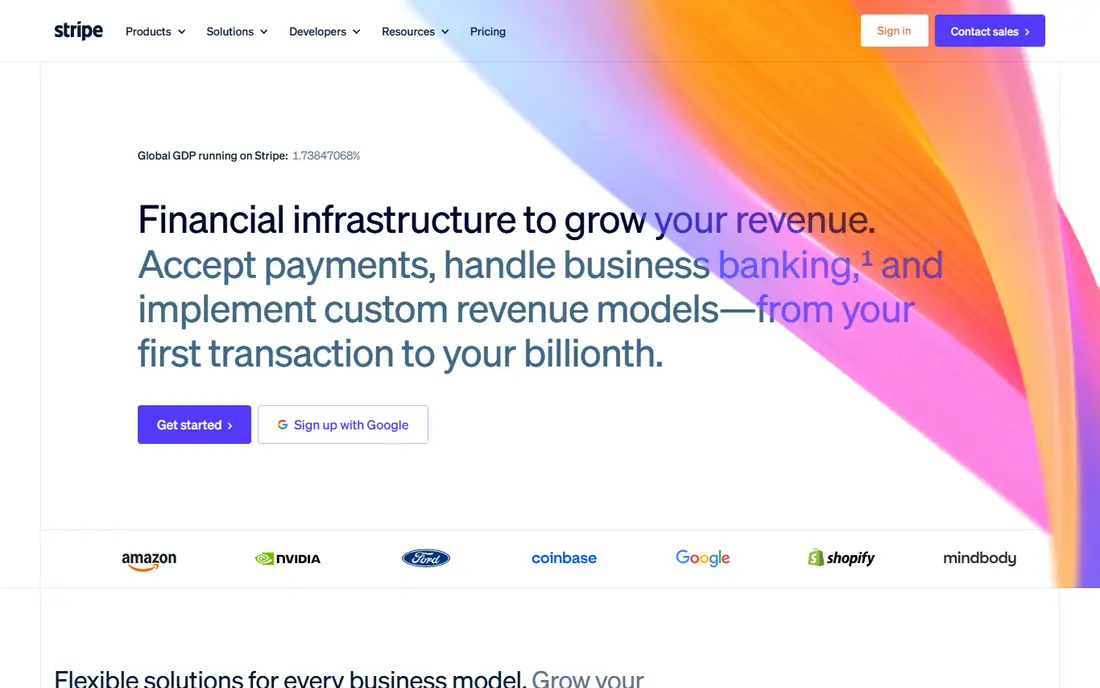
Stripe is our pick for most online businesses. Its standard plan is pay-as-you-go: 2.9% + 30 cents per successful domestic card payment, with no setup or monthly fees. ACH Direct Debit costs 0.8% capped at $5, which is handy for large invoices and subscriptions.
What sets Stripe apart is breadth. It handles subscriptions, invoices, payment links, marketplaces and dozens of payment methods through one account. Stripe reports 99.999% average historical uptime and handles more than 250 million API requests a day.
The catch is that the headline rate grows quickly for some sales. International cards add 1.5%, currency conversion adds 1%, and manually keyed cards add 0.5%. Disputes cost $15 each, and another $15 if you counter one. Businesses with high volume can ask Stripe for custom pricing.
- No setup, monthly or hidden fees on standard pricing
- Accepts cards, wallets, bank debits and buy now pay later
- Strong developer tools and documentation
- International cards add 1.5% and manually entered cards add 0.5%
- $15 fee for each dispute received
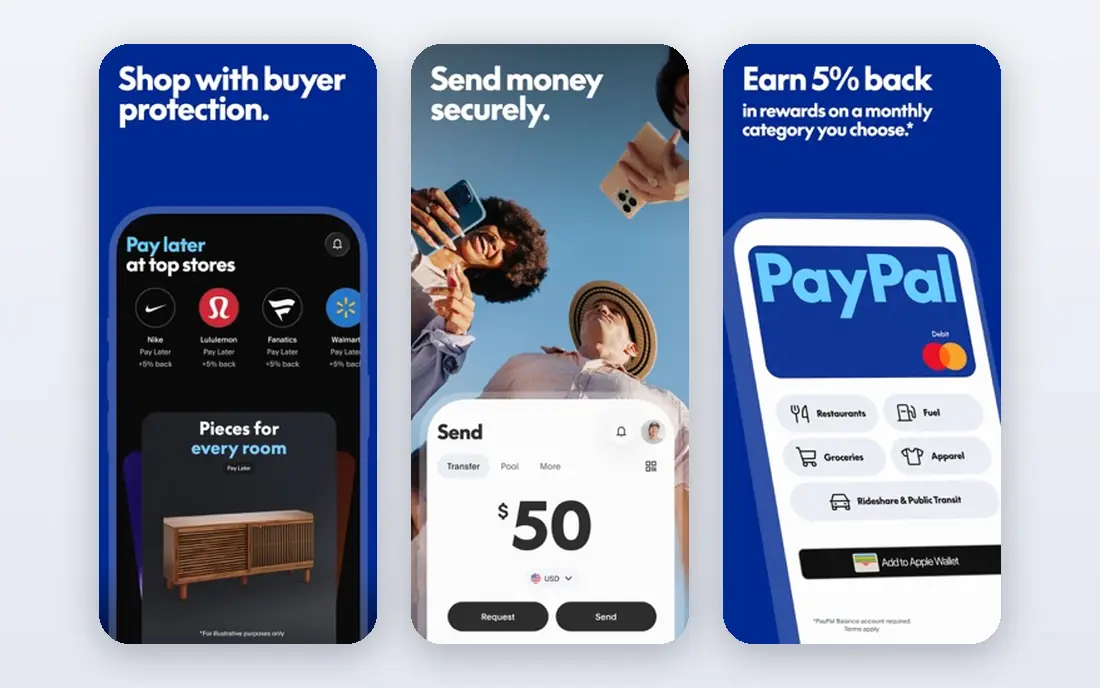
PayPal's main advantage is trust. Many shoppers will happily click a PayPal button where they would hesitate to type a card number into a small store. Offering it alongside card payments can lift checkout conversion, especially for first-time customers.
The US fee page lists PayPal Checkout and PayPal Guest Checkout at 3.49% plus a fixed fee, and the fixed fee for US dollars is 49 cents. Standard credit and debit card payments are 2.99% plus a fixed fee, Pay Later options are 4.99% plus a fixed fee, and receiving international transactions adds 1.5%.
That pricing is the honest weakness. On a $50 order, 3.49% + 49 cents is about $2.24, compared with $1.75 on Stripe's standard rate. Many stores offer PayPal as one option rather than their only processor.
- Huge base of buyers who already have PayPal accounts
- One button covers PayPal, Venmo and Pay Later
- Standard card payments are 2.99% plus a fixed fee
- PayPal Checkout fees are higher than Stripe or Square
- International payments add a 1.5% fee
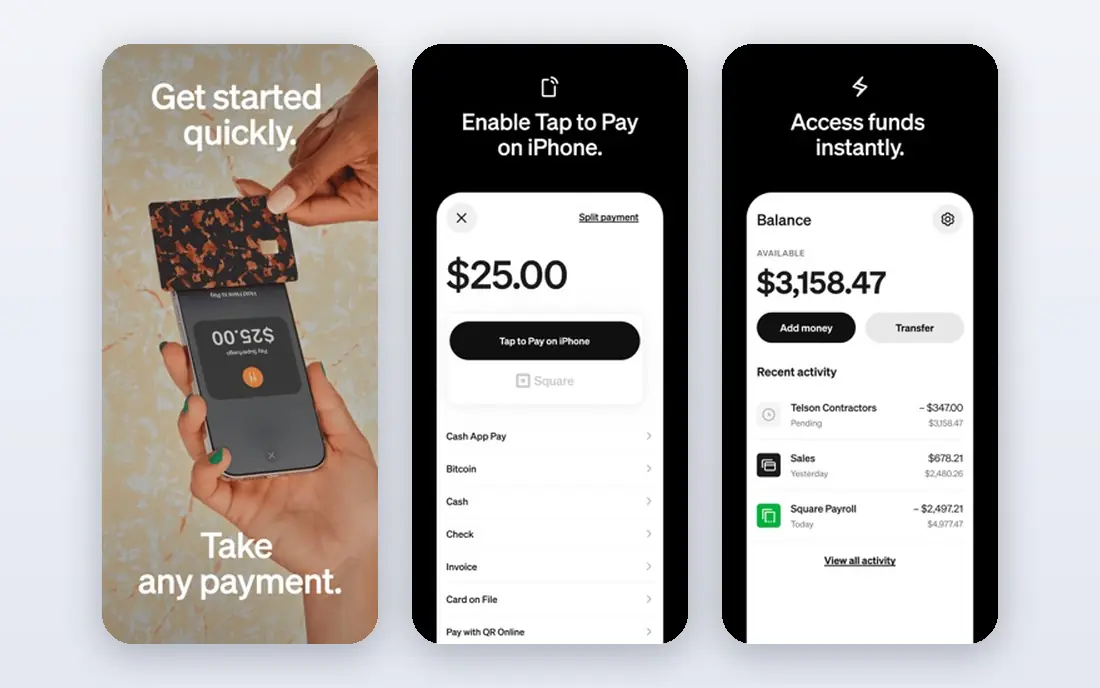
Square is the easiest choice for a business that sells at a counter, a market stall and online. The free plan includes the point-of-sale app, an item library, invoicing and a basic online store or ordering site. Card readers plug straight into the same account.
Fees depend on the plan. On Square Free, online card payments cost 3.3% + 30 cents and tap, dip or swipe payments cost 2.6% + 15 cents. Square Plus ($49 per month per location) and Square Premium ($149 per month per location) lower online payments to 2.9% + 30 cents. ACH invoice payments are 1% with a $1 minimum.
The weakness is the online rate on the free plan, which is higher than Stripe's. If most of your sales are online, compare your monthly volume against the $49 Plus fee to see which works out cheaper. Square also offers custom pricing for businesses processing over $250,000 a year.
- Free plan with POS app, online store and invoices
- In-person payments from 2.6% + 15 cents on the free plan
- One dashboard for shop, website and card reader
- Online card rate on the free plan is 3.3% + 30 cents
- Manual card entry costs 3.5% + 15 cents
Helcim is a strong alternative for small businesses that feel they are overpaying on flat rates. Instead of one fixed percentage, it charges the card network's interchange cost plus a published margin. For keyed and online payments, that margin starts at interchange + 0.50% + 25 cents and drops as your volume grows.
Helcim lists no account monthly fees, no minimums, no signup fees and no PCI fees. It says most merchants end up with an effective rate below 2.5% for keyed and online payments and near or below 2% in person. It also offers surcharging and convenience fee tools.
The honest catch is complexity. Interchange varies by card type, so your effective rate changes from month to month. If you want a single number you can quote to your accountant, a flat-rate processor is simpler.
- No monthly, signup, PCI or statement fees
- Interchange-plus pricing with automatic volume discounts
- Online margin starts at interchange + 0.50% + 25 cents
- Interchange-plus statements are harder to read than one flat rate
- Smaller brand than Stripe or PayPal
PayPal Braintree
Best for: larger online stores wanting PayPal, Venmo and cards together
Braintree is PayPal's enterprise-grade payment platform, and it now lives within PayPal's business site. It lets a store take cards, PayPal, Venmo and other wallets through one integration, which is useful when you want PayPal's trust without running two separate systems.
The published rate for standard merchants is 2.89% + 29 cents for cards and third-party digital wallets. ACH direct debit costs 0.75% capped at $5 on the standard schedule, and verified 501(c)(3) charities get 2.19% + 29 cents. Venmo payments cost 3.49% + 49 cents.
The trade-off is setup. Braintree is designed for developers and larger merchants, so a small shop without technical help will find Stripe or Square easier to launch.
- Cards and digital wallets at 2.89% + 29 cents
- PayPal and Venmo in the same integration
- Discounted 2.19% + 29 cents rate for verified 501(c)(3) charities
- Needs a developer to integrate
- Venmo transactions cost 3.49% + 49 cents
Authorize.net is one of the oldest payment gateways in the US and is owned by Visa. Its strength is flexibility: if your bank or an independent sales organization already gives you a merchant account with good rates, Authorize.net can sit in front of it and connect to your website or shopping cart.
It offers three plans, each with a $25 monthly fee. The all-in-one plan includes a merchant account at 2.9% + 30 cents per transaction. The gateway-only plan charges 10 cents per transaction, and the gateway plus eCheck plan adds bank payments at 0.75%.
The weakness is cost for small sellers. Paying $25 a month on top of 2.9% + 30 cents makes little sense if you process only a few thousand dollars. It makes sense when you already have a cheaper merchant account and just need a gateway.
- Long-running gateway that works with many merchant accounts
- Gateway-only plan at 10 cents per transaction
- ECheck payments at 0.75%
- $25 monthly fee on every plan
- All-in-one rate of 2.9% + 30 cents is no cheaper than Stripe
Stax flips the usual model. Instead of taking a percentage on top of each sale, it charges a monthly subscription and passes card interchange through at cost with 0% markup. For businesses processing large amounts, that can save a meaningful sum each month.
Stax says subscriptions are based on processing volume: $99 a month for up to $150,000 a year and $139 a month for $150,000 to $250,000, with custom quotes above that. Those prices do not include a cents-per-transaction fee. ACH payments cost 1% per transaction, capped at $10.
The catch is the break-even point. A business doing a few thousand dollars a month will pay more with Stax than with a flat-rate processor. Ask for a quote with your real volume before switching.
- 0% markup on direct-cost interchange
- Subscription price set by processing volume
- ACH at 1% capped at $10
- Starts at $99 a month plus a per-transaction cent fee
- Only pays off at higher volumes
Adyen powers payments for many large global brands, and its main strength is international reach. One integration gives you cards plus local payment methods in many countries, which matters if you sell across borders.
Its pricing page lists a fixed processing fee of $0.13 per transaction plus a fee that varies by payment method. Card payments are priced on an interchange++ basis, which passes through the actual interchange and scheme costs with a markup. Adyen says there are no setup or monthly fees.
Adyen is not aimed at small businesses. Onboarding and integration are built for companies with technical teams and significant volume. For most small sellers, Stripe offers similar reach with much easier setup.
- No setup or monthly fees
- Dozens of local payment methods through one integration
- Interchange++ pricing for transparency
- Built for large businesses rather than small shops
- Every transaction carries a $0.13 processing fee plus a method fee
How we picked these
We read each provider's official US pricing page in October 2026 and recorded the published card rates, monthly fees, ACH fees and dispute fees. We focused on services that let a US business accept online payments directly, and we included a mix of flat-rate, interchange-plus and subscription models.
We did not open merchant accounts or process live payments with each one. Instead, we compared what a typical small business would pay on published rates and noted where fees climb, such as international cards, manual entry and disputes. Where a provider does not publish a simple starting price, we wrote "See website."
How to choose a payment processor for your business
Work out your real cost per sale
Take your average order value and run it through each provider's rate. On a $20 sale, a 30 cent fixed fee is 1.5% on its own, so low-price sellers should look closely at the fixed part. On a $500 invoice, the percentage matters far more, and ACH payments with a fee cap can save a lot.
Pick a pricing model that fits your volume
Flat rates (Stripe, Square, PayPal) are simple and best for new or small businesses. Interchange-plus (Helcim, Adyen) usually costs less as volume grows. Subscription models like Stax only pay off once you process large monthly amounts.
Check payout speed and holds
New accounts are sometimes subject to rolling reserves or payout delays while the provider learns your business. Read the terms on payout timing, and keep some cash on hand in your first months.
Plan for disputes and fraud
Chargebacks cost money and time. Look for built-in fraud screening, clear dispute tools and the dispute fee in the price list. Stripe, for example, charges $15 per dispute received.
Think about where you sell
If you sell in person too, Square or Helcim keeps everything in one dashboard. If you sell internationally, Stripe and Adyen handle more currencies and local payment methods.
Sources
- https://stripe.com/pricing
- https://www.paypal.com/us/business/paypal-business-fees
- https://squareup.com/us/en/pricing
- https://www.helcim.com/pricing/
- https://www.paypal.com/us/enterprise/paypal-braintree-fees
- https://www.authorize.net/sign-up/pricing.html
- https://staxpayments.com/pricing/
- https://www.adyen.com/pricing